
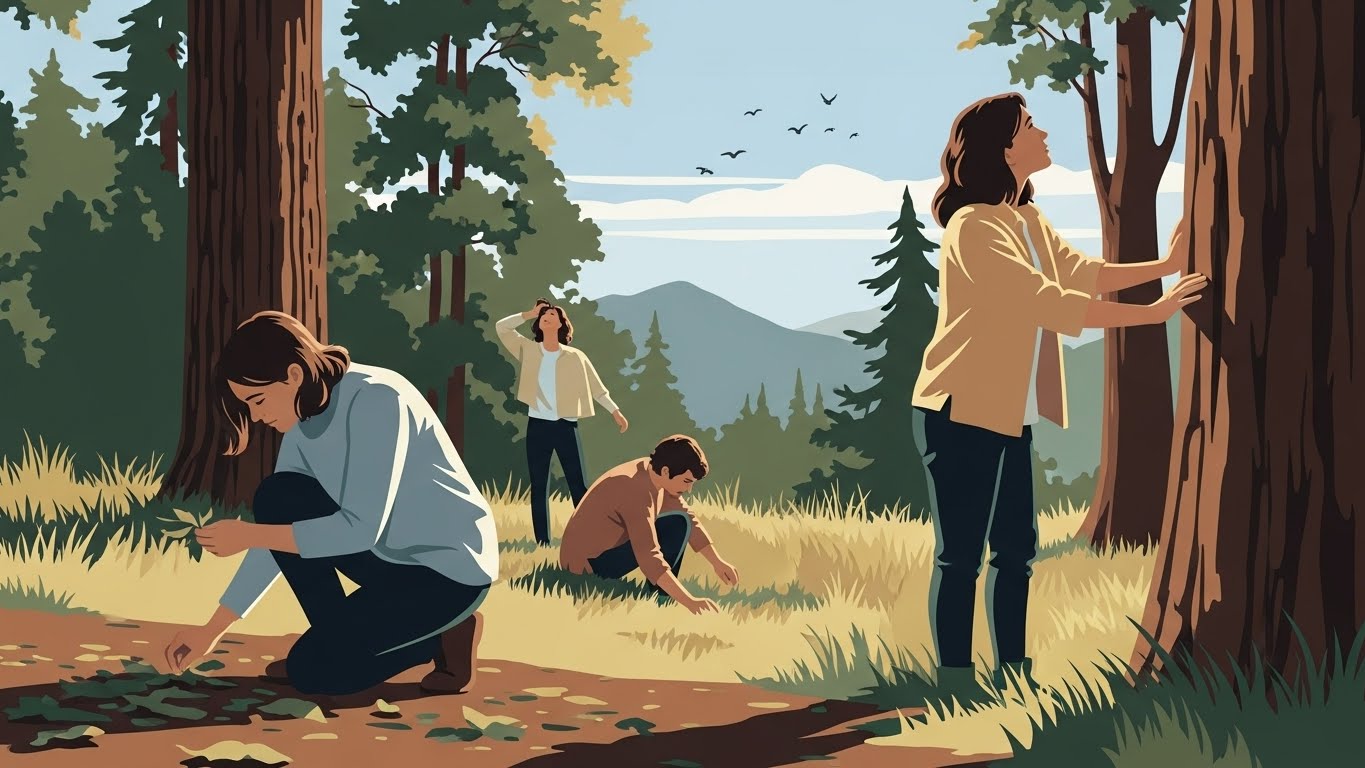
Wisdom in the Wild: 6 Lessons from Nature
1. Everything Has a Purpose
In a forest, even the tiniest fungi break down fallen leaves to nourish the soil. Bees pollinate, earthworms aerate, and roots hold the ground together. From the mightiest creatures to the tiniest organisms- everything and everyone has a role, even if it is quiet or invisible.
Similarly, every person in this world has a purpose and every life has a meaning. So, the next time you question yourself, remember: as nature says, you are worth it.
2. Don’t Hurry
Nature never rushes. Seasons shift slowly, flowers bloom only when ready. Waves rise and fall at their own pace, unaffected by our urgency. We have traded life’s rhythm for deadlines and processes for outcomes. It is important to sit back, slow down and retrospect upon what truly matters.
3. Balance Brings Beauty
Ecosystems thrive only when predators, plants, and climate stay in harmony.
Even our bodies constantly adjust - temperature, hormones, heartbeat, to stay balanced.
Too much of anything, even sunshine or rain, harms nature and us alike. True wellbeing comes from maintaining equilibrium, not extremes.
4. Adapt to Surroundings
Cactuses store water to survive deserts, and chameleons shift colour for protection. When environments can’t change, nature changes itself. Adaptability is the greatest ability that is misunderstood for convenience. Adjusting our mindset, habits and reactions to new challenges teaches us resilience. It gives us the strength to survive all storms.
5. What Goes Around, Comes Around
Fallen leaves enrich the soil, and rivers return to the sea. Nature runs in cycles, and so do our actions. Our choices, good or bad, eventually return to us in consequences. When you make someone smile, life gives you laughter. Hence, nature shows a very important lesson: spread what you want to receive.
6. An ocean is a sum of water particles
In recent times, a large number of individuals tend to feel alone, which leads to anxiety, instability and feeling unhappy in general. In nature, every individual thing is a part of a larger system, like an ocean is a sum of the many water drops, and each drop is equally important in making an ocean what it is. Just like that, we all humans are a part of a larger community, i.e the world we live in. Every soul is important and everyone belongs here.
Nature’s Benefits: What Science says
The evidence supporting nature's benefits isn't just anecdotal - it's overwhelming. A comprehensive scoping review analyzing 952 studies found that 92% demonstrated consistent health improvements when individuals actively engaged with natural outdoor environments, with mental health improvements appearing in a remarkable 98% of studies examined. The research is so compelling that healthcare practitioners are increasingly turning to nature-based interventions as cost-effective solutions for treating poor mental health.
Spending at least 20 to 30 minutes in nature produces the biggest drops in cortisol, our primary stress hormone, while two hours weekly in green spaces marks a threshold for substantially better reported health and psychological wellbeing. Evidence-based scientific research is recognizing what our ancestors lived with - nature is healing.
Personal Reflection
Spending time in sunlight and open winds has taught me one of nature’s simplest but most powerful lessons: renewal comes from openness. I feel recharged when warm light falls on my skin. The wind reminds me to let things move through me instead of holding everything in; it clears the mind the way it clears the skies. Nature shows that healing does not happen in confinement. It happens when you give space: space to breathe, space to change, space to grow
Learn with nature: A try it yourself Practical Checklist
· Spend 5 minutes outside each morning before checking your phone, noticing one sound, one smell, and one visual detail
· Walk the same route daily and challenge yourself to spot one new natural detail
· Choose one tree near your home and visit it weekly throughout the year, photographing or journaling how it changes through each season
· Identify what you see, then put your phone away and simply observe for 10 minutes
· Share one nature observation with a friend or family member each week
· Wake up early once a week to observe dawn, noticing how the world transitions from night to day and which creatures emerge first
· While waiting in traffic, look outside and name three natural things you can see, even if it's just sky, a plant, or a bird